
In precision machining of parts, there are four cutting shapes that are generated, and one of them is definitely something you have encountered before
In precision machining of parts, there are four cutting shapes that are generated, and one of them is definitely something you have encountered before
In the process of cutting and forming materials, precision parts machining produces different cutting shapes due to the different densities and conditions of the processed materials. Generally, four different types of cutting shapes are formed, namely strip cutting, extrusion cutting, granular cutting, and bouncing cutting, as shown in the following figure.
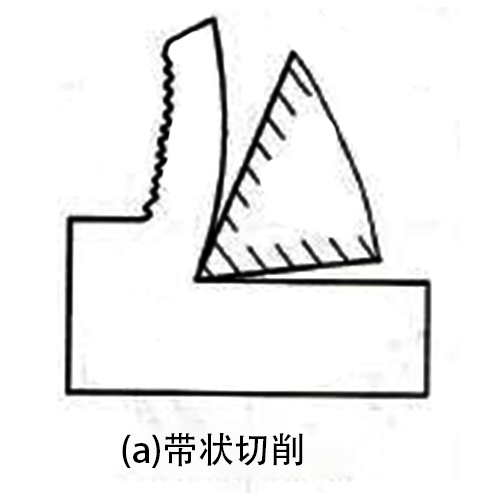
(1) Strip cutting: During the cutting process, if the slip on the slip surface does not reach the fracture strength (i.e., insufficient plastic deformation), a continuous strip cutting will be formed (see Figure a), where the side close to the cutting is smooth and the other side is hairy.
When cutting metal materials with high plasticity (such as carbon steel, alloy steel, copper and alloy copper, aluminum and aluminum alloys) or when the tool rake angle is large and the cutting speed is too high, this type of cutting often occurs
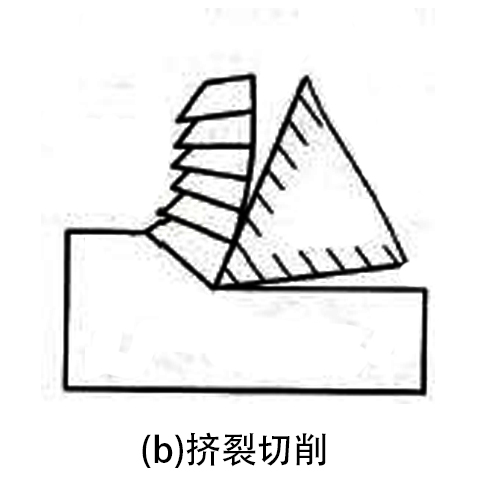 (2) Squeezing cutting (also known as sectional cutting): During the cutting process, if the slip on the slip surface is sufficient and reaches the material's fracture strength, the local material on the slip surface will break into a sectional shape, but the side in contact with the front can still be connected without being broken, which is called squeezing cutting (see Figure b). This type of cutting is easier to obtain when cutting steel with larger feed rates.
 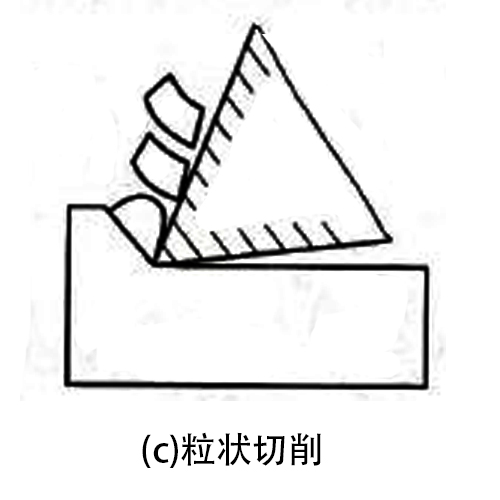 (3) Granular cutting: During the cutting process, if the fracture strength of the material is exceeded on the entire sliding surface, the cutting will become granular cutting (see Figure c). This type of cutting occurs when cutting plastic materials with low speed and high feed rate. Precision parts processing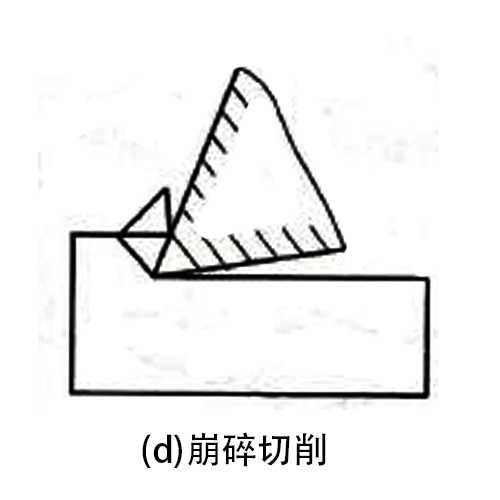
(4) Collapse cutting: When cutting brittle metal materials such as cast iron and brass, the cutting layer almost cracks without going through the plastic deformation stage. The obtained cutting is irregular granular (see Figure b), and the surface of the processed workpiece is also relatively rough.
What kind of problem do you encounter during the machining process of precision parts that even experienced technicians may encounter? Precision parts processing